

Risk Management · 2025
In this section2 topics
Risk Management Policy & Plan
Policy & Plan Description
1. Risk Management Policy and Framework
TCM Corporation Plc. (the "Company") is firmly committed to robust risk management as a foundational pillar to ensure operational continuity and the sustainable achievement of long-term strategic goals. Risk management is not viewed as a standalone function but is deeply integrated into our core business strategy, establishing it as a fundamental responsibility for employees at every level of the organization, from frontline operations to the Board of Directors.
Our framework is strictly aligned with the international standards of The Committee of Sponsoring Organizations of the Treadway Commission (COSO). This alignment ensures that all stakeholders operate under a unified language of risk, facilitating strict legal and regulatory compliance across diverse jurisdictions where we operate. By fostering a proactive risk culture, the Company aims to identify, evaluate, and prioritize potential threats before they materialize, thereby protecting shareholder value and enhancing corporate resilience in an increasingly volatile global landscape.
2. Risk Governance Structure
The Board of Directors proactively restructured our risk governance framework to fully integrate sustainability (ESG) into the heart of our risk analysis and decision-making processes. The Sustainable and Risk Management Committee (SRMC) now serves as the primary oversight body, ensuring that financial goals do not compromise our commitment to environmental and social responsibility.
Audit Committee: Responsible for independent oversight of internal controls, financial integrity, and the efficacy of the audit processes. It acts as the "third line of defense," ensuring that risk management practices are functioning as intended and are subject to rigorous internal scrutiny.
Sustainable and Risk Management Committee (SRMC): Tasked with screening high-level strategies and policies for both the Group and its subsidiaries. The committee, comprising 9 senior executives, ensures that all risk levels remain within the Company’s defined "Risk Appetite" and aligns with our commitment to achieving Net Zero by 2050, and requires meetings to be held at least twice a year.
Operational Working Groups: Comprising dedicated teams from TCM Surface, TCM Living, and TCM Automotive. These groups are responsible for the tactical implementation of risk mitigation measures, ensuring that global policies are translated into effective local actions specific to their unique manufacturing and market contexts.
During the current reporting period, the Company reviewed its Risk Management and Internal Control policies and manuals and also conducted risk management workshops for employees and senior executives, covering climate-related risks and emerging risks. The Company intensified its focus by attending specialized workshops on climate-related financial disclosures (IFRS S1/S2) and emerging cyber threats. We utilized Bow-Tie Analysis to map root causes and potential consequences, enabling us to establish more precise Key Risk Indicators (KRIs) to monitor real-time performance against our risk thresholds.
3. Risk Assessment Heat Map (2025)
Risks are evaluated based on their Likelihood of occurrence and potential Impact on the Company's financial stability, brand reputation, and operational capacity.
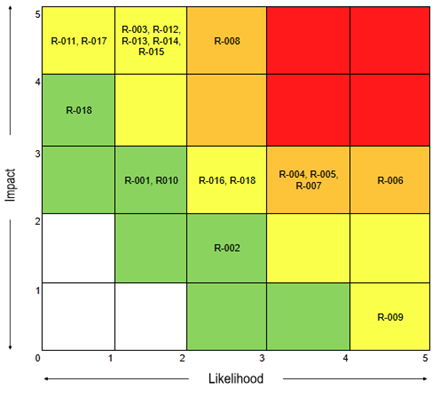
No | Risk ID | Risk Description | Category | Score | Trend |
1 | R-006 | Changing Customer Trends | Operational | 15 | Stable |
2 | R-008 | Interest Rate & Liquidity | Financial | 15 | Increased |
3 | R-004 | Subsidiary Performance | Strategic/Operation | 12 | Increased |
4 | R-005 | Reduced Purchasing Power | Operational | 12 | Stable |
5 | R-007 | Supply Chain & Geo-Politics | Operational/Emerging | 12 | Increased |
6 | R-003 | Lack of Innovation | Strategic | 10 | Stable |
7 | R-012 | ESG – Environmental | ESG | 10 | Stable |
8 | R-013 | ESG – Social | ESG | 10 | Stable |
9 | R-014 | ESG – Governance | ESG | 10 | Stable |
10 | R-015 | Climate Change – Physical Risk | ESG | 10 | Stable |
11 | R-016 | Climate Change – Transition Risk | ESG | 9 | Stable |
12 | R-018 | Technological Change (AI) | Technology | 9 | Stable |
13 | R-001 | Unprofitable Investments / M&A | Strategic | 6 | Decreased |
14 | R-002 | New Market & Product Expansion | Strategic | 6 | Stable |
15 | R-010 | Human Resources | HR/Operation | 6 | Decreased |
16 | R-009 | Foreign Exchange Volatility | Financial | 5 | Stable |
17 | R-011 | Compliance | Compliance | 5 | Stable |
18 | R-017 | Cyber Threats | Emerging | 5 | Increased |
19 | R-019 | New Pandemics | Emerging | 4 | Stable |
Policy Document Link
https://www.tcm-corporation.com/upload/esgpolicy/fileen_260304084653.pdf
Page Number in Report
1
Risks to the Company's Business Operations
Risk Register
| Risk Name | Risk Characteristics | Consequences | Management Measures | Related Risk Factors |
|---|---|---|---|---|
| Strategic Risks Subsidiary Performance Not Meeting Targets (R-004) | Volatile global economic conditions, particularly stagnation in international markets, may cause operational results of subsidiaries to deviate significantly from set targets. | This can lead to consolidated financial losses, impaired cash flows, and a hindrance to our long-term global expansion and capital allocation strategies, including the ability to pay dividends to shareholders | We maintain direct Board representation in all major subsidiaries to ensure strategic alignment. Implementing strict Authority of Limits (AOL) and rigorous annual budget approval processes provides financial discipline. We have adopted a flexible business planning approach that includes proactive monthly performance reviews to respond to regional market shifts.
| 728 · Description: Volatility in the industry in which the company operates · Info category: STRATEGIC_RISK · 746 · Description: Delays in the development of future projects · Info category: OPERATIONAL_RISK · 1715 · Description: Economic risk · Info category: STRATEGIC_RISK |
| Operational Risks Lack of Innovation in the Organization (R-003) | In an industry increasingly driven by sustainable design and smart functionality, failure to invest in R&D or adapt to new material technologies creates a stagnation risk. | This leads to product obsolescence, a long-term loss of market share to more agile competitors, and the erosion of our premium brand positioning. It also makes the Company less attractive to younger, eco-conscious demographics. | We are actively promoting an innovative culture through the internal "Wow-Idea" project and cross-functional teams. The Innovation Task Force is mandated to identify emerging material trends and circular economy manufacturing technologies. We have increased dedicated R&D investment and regularly consult with global design experts and academic institutions to ensure our product roadmap remains at the industry's cutting edge.
| 729 · Description: Behavior or needs of customers / consumers · Info category: STRATEGIC_RISK · 732 · Description: Changes in technologies · Info category: STRATEGIC_RISK · 743 · Description: Product obsolescence · Info category: OPERATIONAL_RISK · 1715 · Description: Economic risk · Info category: STRATEGIC_RISK |
| Strategic Risks Investments in Unprofitable Ventures (R-001) | Past M&A transactions may encounter shifting environments that prevent them from achieving returns as originally planned or result in debt burdens that become difficult to manage. | Consequences include significant capital impairment, increased debt-to-equity ratios, and a drain on management resources that could have been allocated to more lucrative growth sectors. | Strict post-investment reviews are conducted regularly. In 2025, the Board of Directors made a strategic decision to dissolve two subsidiaries in the UK that had incurred continuous accumulated losses. This action aimed to eliminate financial burdens and maintain the overall stability of the corporate group, while focusing on cost reduction and efficiency improvements in core business operations to ensure a return to growth when the market recovers.
| 728 · Description: Volatility in the industry in which the company operates · Info category: STRATEGIC_RISK · 733 · Description: Business operations of partners in the supply chain · Info category: STRATEGIC_RISK · 1715 · Description: Economic risk · Info category: STRATEGIC_RISK |
| Strategic Risks Market Expansion and New Product Launches (R-002) | The introduction of new products into unfamiliar markets carries the risk of low customer acceptance or the simultaneous launch of substitute products by competitors. | This could result in the loss of marketing budgets and development time, as well as potential damage to brand reputation if new products fail to meet customer expectations. | The Company conducts market demand surveys and pilot testing with target groups prior to full commercial launch. Furthermore, sales teams are trained to deeply understand key product features, and a feedback system is implemented to facilitate immediate product improvements.
| 729 · Description: Behavior or needs of customers / consumers · Info category: STRATEGIC_RISK · 746 · Description: Delays in the development of future projects · Info category: OPERATIONAL_RISK · 1714 · Description: Competition risk · Info category: STRATEGIC_RISK · 747 · Description: Business operations that have no commercial results · Info category: OPERATIONAL_RISK |
| Operational Risks Changing Customer Trends (R-006) | Due to global shifts in both technology and environmental conditions, consumer behaviors are evolving rapidly. Key trends include a preference for eco-friendly materials, ethical sourcing, online purchasing, and a demand for immediate responsiveness. These factors pose a risk that traditional artisanal products may be perceived as less relevant to contemporary consumer needs. | Failure to adapt may alienate key customer segments, leading to a permanent erosion of the brand's premium status and a significant reduction in long-term revenue streams. | The Company fosters a customer-focused corporate culture by utilizing various tools to deepen client engagement and insights. We have incorporated "Design Thinking" into our product development process to better understand customer needs, and a knowledge-sharing system is in place between the sales and product development teams. Substantial investment has been made in customer-facing technologies such as 3D visualization and AR applications, enabling clients to preview carpet installations in their own spaces. We also maintain a clear brand positioning while adopting advanced design technologies to speed up time-to-market and grow our range of products made from recycled materials.
| 729 · Description: Behavior or needs of customers / consumers · Info category: STRATEGIC_RISK · 743 · Description: Product obsolescence · Info category: OPERATIONAL_RISK · 751 · Description: Impact on the environment · Info category: OPERATIONAL_RISK |
| Operational Risks Reduced Purchasing Power (R-005) | Rising household debt and inflation have led target customers to delay high-end purchases or switch to more affordable substitutes. Furthermore, some customer segments have been severely impacted to the point of business closure. | Loss of market share and a decline in total sales revenue. Gross profit margins may decrease due to the necessity of promotional campaigns to maintain sales volume. | Develop "Value for Money" product lines that maintain the Company’s quality standards at more accessible price points. Additionally, production processes are being optimized to reduce costs and enhance market competitiveness.
| 729 · Description: Behavior or needs of customers / consumers · Info category: STRATEGIC_RISK · 1715 · Description: Economic risk · Info category: STRATEGIC_RISK |
| Operational Risks Supply Chain & Geo-Politics (R-007) | Political instability and disputes across major shipping routes have resulted in surging freight costs and extended lead times for raw material procurement. | Sudden increases in production costs and delays in product delivery, which may lead to order cancellations or contractual penalties. | Expand the supplier base through a multi-sourcing strategy across diverse regions to diversify risk. The Company maintains strategic reserves of key raw materials and regularly reviews selling prices to accurately reflect actual cost fluctuations.
| 731 · Description: Policies or international agreements related to business operations · Info category: STRATEGIC_RISK · 733 · Description: Business operations of partners in the supply chain · Info category: STRATEGIC_RISK |
| Operational Risks Technological Change & AI (R-018) | The rapid emergence of Artificial Intelligence (AI) in design and manufacturing threatens to disrupt traditional artisanal processes and long-standing production cycles. | Competitors leveraging AI for rapid prototyping or automated customer interaction could significantly reduce their time-to-market, leaving the Company at a competitive disadvantage in terms of speed and operational cost. | The Company is currently conducting feasibility studies on integrating AI for predictive customer support and automated design assistance. Our IT infrastructure is being upgraded to support data-driven decision-making, accompanied by "Growth Mindset" training to help our workforce transition into a digitally augmented workplace without losing our core craftsmanship.
| 732 · Description: Changes in technologies · Info category: STRATEGIC_RISK |
| Operational Risks Human Resource (R-010) | The transition into an aging society has led to a shortage of skilled labor and personnel in critical positions. | A decline in production efficiency, an increase in operational errors, and the potential loss of vital organizational knowledge if an effective succession plan is not in place. | The Company has implemented a comprehensive Succession Plan and developed competitive incentive and benefit packages to retain high-potential talent. We are actively cultivating a corporate culture rooted in unity and collaboration, while fostering an innovation and growth mindset that empowers employees to adapt to evolving environments. Additionally, labor-saving technologies are being integrated into feasible operational areas to optimize workforce productivity.
| 738 · Description: Reliance on employees in key positions · Info category: OPERATIONAL_RISK · 739 · Description: Shortage or reliance on skilled workers · Info category: OPERATIONAL_RISK · 752 · Description: Impact from population structure · Info category: OPERATIONAL_RISK |
| Financial Risks Interest Rate and Liquidity Risk (R-008) | Persistent high interest rates in global markets directly increase Finance Costs on the Company’s floating-rate debt while dampening consumer demand for luxury interior goods. | This combination can tighten operating cash flows, increase the risk of debt covenant breaches, and impact the Company's overall ability to service its financial obligations. | The company is proactively restructuring debt by renegotiating repayment schedules and deferring principal and interest to preserve liquidity. We maintain sufficient cash reserves for group operations and closely monitor short-to-medium-term liquidity through rolling cash flow projections with subsidiaries. Additionally, we have secured backup credit lines and strictly manage the D/E ratio within defined limits.
| 764 · Description: Fluctuation in exchange rates, interest rates, or the inflation rate · Info category: FINANCIAL_RISK · 1724 · Description: Liquidity risk · Info category: FINANCIAL_RISK · 1715 · Description: Economic risk · Info category: STRATEGIC_RISK |
| Financial Risks Foreign Exchange (FX) Volatility (R-009) | The company earns export revenue and incurs raw material import costs in foreign currencies (USD, GBP), which are subject to volatility driven by global economic conditions. | Operating profit may decline due to foreign exchange differences, while the balance sheet may be impacted by non-cash translation losses. Furthermore, currency volatility can lead to inaccuracies in revenue forecasting. | We utilize "Natural Hedging" by matching currency inflows and outflows within our international subsidiaries. Furthermore, we employ forward exchange contracts and options based on rolling 12-month exposure forecasts to lock in favorable rates and provide predictability to our financial planning.
| 764 · Description: Fluctuation in exchange rates, interest rates, or the inflation rate · Info category: FINANCIAL_RISK · 1725 · Description: Income volatility · Info category: FINANCIAL_RISK |
| Compliance Risk (R-011) | New trade laws and standards, particularly increasingly stringent environmental regulations in Europe, present ongoing compliance challenges. | Failure to meet these criteria could lead to operational suspensions, heavy financial penalties, and the loss of export privileges in key markets. | A dedicated Compliance unit has been established to monitor legal changes closely. Furthermore, quarterly update meetings are conducted to ensure all relevant departments are informed and aligned with new requirements.
| 756 · Description: Change in laws and regulations · Info category: COMPLIANCE_RISK |
| Sustainability Risks (ESG) Environmental (R-012) | Production processes may impact the environment through waste discharge, noise and air pollution, and water and energy consumption. | Non-compliance with legal standards, strained community relations, potential grievances, and reputational damage. | Annual environmental impact assessments are conducted across all three business units, covering energy, water, waste, and greenhouse gas (GHG) emissions. Current results meet legal standards. The company has established a risk control plan with a Net Zero 2050 target and fosters an organizational culture of environmental stewardship across all business processes.
| 1717 · Description: ESG risk · Info category: STRATEGIC_RISK · 751 · Description: Impact on the environment · Info category: OPERATIONAL_RISK |
| Sustainability Risks (ESG) Social (R-013) | Risks arising from non-compliance with labor laws or failure to assess impacts and maintain community relations. | Legal non-compliance, social friction, grievances, and loss of brand reputation. | Strict adherence to labor laws and the implementation of a company-wide Human Rights Policy. We maintain multiple grievance channels, employee well-being clubs, and dedicated Safety Officers. Community engagement includes regular impact surveys and support through carpet donations to temples and schools, as well as educational scholarships.
| 749 · Description: Safety, occupational health, and working environment · Info category: OPERATIONAL_RISK · 1717 · Description: ESG risk · Info category: STRATEGIC_RISK · 753 · Description: Impact on human rights · Info category: OPERATIONAL_RISK |
| Sustainability Risks (ESG) Governance (R-014) | Lack of good governance, abuse of power, or corruption. | Violation of legal standards, severely damaging personnel credibility and corporate image. | Participation in the Thai Private Sector Collective Action Against Corruption (CAC) and maintaining a transparent Whistleblowing system overseen by the Audit Committee. Anti-corruption policies and the Code of Conduct are integrated into new hire orientations and reviewed annually to ensure alignment with corporate values.
| 756 · Description: Change in laws and regulations · Info category: COMPLIANCE_RISK · 759 · Description: Corporate Governance · Info category: COMPLIANCE_RISK · 1717 · Description: ESG risk · Info category: STRATEGIC_RISK |
| Climate Change – Physical Risks (R-015) Acute Physical Risks | Natural disasters such as floods or heatwaves. | Operational disruptions leading to delayed deliveries, reduced efficiency, loss of revenue, and diminished credibility. | Regular risk reviews by the Sustainability and Risk Management Committee. An Emergency Response Team and Business Continuity Plan (BCP) are in place, supported by comprehensive asset insurance and diversified production sites.
| 750 · Description: Climate change and disasters · Info category: OPERATIONAL_RISK · 1719 · Description: Climate change and disasters · Info category: STRATEGIC_RISK |
| Climate Change – Physical Risks (R-015) Chronic Physical Risks | Abnormal seasonal shifts affecting wool quality/supply, water scarcity, and rising sea levels, impacting logistics for partners and customers in affected zones. | Increased investment in dyeing innovation, higher procurement costs for alternative raw materials, or the need for new logistics routes. | Diversifying raw material sources and developing alternative fibers. We monitor water levels to plan storage and invest in resource-efficient machinery, such as low-water dyeing machines and high-speed looms that reduce production waste.
| 750 · Description: Climate change and disasters · Info category: OPERATIONAL_RISK · 1719 · Description: Climate change and disasters · Info category: STRATEGIC_RISK |
| Climate Change – Transition Risks (R-016) Policy and Legal | Implementation of Carbon Taxes (e.g., in Europe) and the adoption of IFRS S1 and S2 reporting standards (effective 2028). | Failure to collect ESG data or obtain Product Carbon Footprint (CFP) certification will result in a loss of regional competitiveness. | Setting Net Zero targets and GHG reduction plans. We are preparing for IFRS S1/S2 reporting and seeking both Product (CFP) and Organization (CFO) Carbon Footprint certifications to mitigate carbon tax impacts.
| 750 · Description: Climate change and disasters · Info category: OPERATIONAL_RISK · 1719 · Description: Climate change and disasters · Info category: STRATEGIC_RISK |
| Climate Change – Transition Risks (R-016) Technology | Transitioning to low-carbon machinery and processes in line with market trends. | High capital expenditure (CAPEX) with a slow return on investment (ROI). | Long-term investment planning and seeking strategic partners to manage financial resources. Prioritizing investments in machinery significantly reduces energy consumption, waste, and environmental impact.
| 750 · Description: Climate change and disasters · Info category: OPERATIONAL_RISK · 1719 · Description: Climate change and disasters · Info category: STRATEGIC_RISK |
| Climate Change – Transition Risks (R-016) Market | Increasing customer demand for eco-friendly products. | Loss of orders in core markets if products lack sustainability certifications. | Developing products with higher recycled/eco-friendly content and optimizing production to reduce GHG emissions. Providing verified certifications to meet specific customer sustainability requirements.
| 750 · Description: Climate change and disasters · Info category: OPERATIONAL_RISK · 1719 · Description: Climate change and disasters · Info category: STRATEGIC_RISK |
| Climate Change – Transition Risks (R-016) Reputation and Stakeholder Expectations | Risks related to meeting the ESG expectations of stakeholders, including customers, partners, investors, and regulators, regarding transparency and concrete action. | Perceived lack of action could damage corporate credibility or lead to public grievances. | Regular satisfaction surveys with all stakeholder groups and efficient grievance management. ESG goals and KPIs are integrated into the annual report (Form 56-1 One Report). We embed ESG into the "corporate DNA" through daily activities and have publicly committed to Net Zero 2050.
| 750 · Description: Climate change and disasters · Info category: OPERATIONAL_RISK · 1719 · Description: Climate change and disasters · Info category: STRATEGIC_RISK |
| Emerging Risks 6.1 Cyber Threats (R-017) | Increasingly sophisticated ransomware, phishing, or social engineering attacks could compromise our sensitive design data, customer databases, or financial systems. | Consequences include prolonged system downtime, loss of intellectual property, severe reputational damage, and heavy penalties under data protection laws such as PDPA and GDPR. In 2025, we successfully neutralized a sophisticated cyber threat identified in an overseas unit through rapid isolation and remediation protocols, resulting in zero data loss. | An Information Technology Security Policy has been established, alongside a risk prevention plan against data breaches and unauthorized access. Data is hosted on both domestic and international servers managed by top-tier providers with the highest security standards. Furthermore, cybersecurity training is provided to employees—focusing on phishing, email threats, and ransomware—to raise organizational awareness and ensure vigilant online practices.
| 744 · Description: Information security and cyber-attack · Info category: OPERATIONAL_RISK |
| Emerging Risks 6.2 Infectious Diseases (R-019) | The outbreak of new infectious diseases poses a risk of mandatory factory closures or large-scale employee absenteeism. | Disruption of production lines, shortages of personnel in critical roles, and adverse effects on liquidity due to the inability to fulfill and deliver product orders. | The Business Continuity Plan (BCP) has been updated to specifically address pandemic scenarios. Additionally, an Emergency Response Team has been established to ensure a swift and effective reaction to any escalating health situations.
| 1718 · Description: Pandemic risk · Info category: STRATEGIC_RISK · 1722 · Description: Pandemic risk · Info category: OPERATIONAL_RISK |