TCM CORPORATION PUBLIC COMPANY LIMITEDSET: TCMC🇹🇭 TH

CG Policy · 2025

Corporate Governance Policy

Has a Corporate Governance Policy

Yes

Policy Description

The Board of Directors has determined to perform corporate efficient operations with competitive potential and high profits. Furthermore, the company prioritizes accountability, prudence, integrity, transparency, and business ethics to treat shareholders and stakeholders with fairness and equality. In addition, the company emphasizes corporate social and environmental responsibility along with respect for human beings, political neutrality, and anti-corruption for sustainable values. Therefore, the company has imposed corporate governance policies to act as a guideline for directors, executives, and employees at all levels. Therefore, the company has imposed corporate governance policies to act as a guideline for directors, executives, and employees at all levels and reviews the policies annually to ensure consistency with the changing environment. Corporate governance is the responsibility of directors, executives, and employees at all levels to perform their duties with accountability, prudence, integrity, transparency, and business ethics for efficient business management with competitive potential and high profits. The company shall treat all shareholders and stakeholders fairly and equally and shall not use internal information for personal interests. In addition, business information shall be transparently exposed. The company shall provide respect for human beings, political neutrality, and anti-corruption for sustainable values.

The Company has been a dedicated member of the Thai Private Sector Collective Action Against Corruption (CAC) since signing its declaration of intent on September 3, 2014. Demonstrating a continuous commitment to transparency and integrity, the Company successfully achieved its 3rd Recertification from the CAC Council in 2025

The company has communicated and published this guideline on the corporate website so that directors, executives, and employees at all levels can comply with the principles of good corporate governance. Furthermore, the guideline has been published to all stakeholders to acknowledge the operational practices of the company. The details are in the company’s website, www.tcm-corporation.com, under the heading of “Corporate Governance.”

Policy Document Link

https://tcm-corporation.com/upload/esgpolicy/fileen_260304083853.pdf

Policy & Practices — Board of Directors

Has Policy & Guidelines for the Board

Yes

Board Guidelines

GuidelineOther — Please SpecifyDetailDocument LinkPage Number in Report
Nomination of Directors

Criteria and procedures for nomination of the Board of Directors

The Board of Directors is responsible for considering, searching for, and selecting the company's directors according to clearly defined and transparent criteria and processes, in accordance with the company's Articles of Association, the regulations of the Securities and Exchange Commission (SEC), and the Stock Exchange of Thailand (SET), in order to obtain company directors who possess the appropriate qualifications as specified by the company, without limitation to gender, race, or religion. This can be summarized as follows:

  1. The Board of Directors has a policy to grant equitable rights to each shareholder, especially minority shareholders, to nominate new Board of Directors in advance. The criteria and procedures of nomination are as shown on the Company’s website (www.tcm-corporation.com).

  2. Appointment of the Board of Directors shall be in accordance with the Company’s articles of association and relevant legal provisions. The shareholders’ meeting shall elect the Board of Directors based on the following criteria and procedures:

    (2.1) One shareholder has one vote per share held.

    (2.2) Each shareholder shall use all votes at their disposal under Clause (2.1) to elect one or many directors, but shall not allocate their votes to any candidates.

    (2.3) The persons who receive the majority vote shall be appointed as directors. In case of equal votes exceeding the number of directors entitled to vote in such a meeting, the Chairman shall cast a vote for the final decision.

  3. The Board of Directors shall determine and review the recruitment criteria and procedures with transparency and clarity to engage qualified, knowledgeable, and expert directors, ensuring a board composition that aligns with the company's business strategies and goals. This includes providing sufficient information for consideration such as age, gender, educational background, and work experience of the persons nominated for the benefit of decision-making and the proposal of opinions to the Board of Directors, prior to the proposal to the shareholders’ meeting for approval of appointment.

    (3.1) Consider the list of directors who are due to retire by rotation and the list of individuals nominated for selection to serve as directors of the company, both from nominations by the Board of Directors and the company's shareholders, especially minority shareholders. In the event that the Board of Directors nominates an existing director, the performance of that director in the past year must also be considered.

    (3.2) Consider individuals nominated to serve as directors of the company according to the qualifications specified in Principle No. 3.

  4. The Board of Directors considers the suitability of individuals nominated to serve as Company Secretary and Assistant Company Secretary, or in the event that such positions become vacant, and submits its opinion to the Board of Directors for further consideration and approval.

  5. The Board of Directors considers and establishes a succession plan for directors, the Chief Executive Officer, and executives who are critical to the company's operations, including setting criteria for considering successors.

Criteria and procedures for nomination of sub-committees

The Company determines the criteria for nomination of the personnel on the basis of principles and procedures stipulated in the Company’s articles of association. The selected persons shall have knowledge, ability, and qualifications as specified in the notification of the Securities and Exchange Commission and the Stock Exchange of Thailand regarding nomination and selection of sub-committees in case of the end of term or vacancy for proposal of the qualified persons to the Board of Directors for further appointment.

The sub-committees shall consist of

  1. Audit Committee shall be comprised of at least three independent directors, and one of them shall have accounting and financial knowledge.

  2. Executive Committee shall consist of at least three executive directors.

  3. The sub-committees, such as the Sustainability and Risk Management Committee, shall be appointed by the Chief Executive Officer as assigned by the Board of Directors.

https://tcm-corporation.com/upload/esgpolicy/fileen_260304083853.pdf21-22
Determination of Director Remuneration

Determination of remuneration of the Board of Directors and sub-committees

Remuneration shall be determined based upon the remuneration structure and rate and shall be appropriate for responsibilities to encourage directors to lead the Company to the achievement of its objectives and short-term and long-term goals. The remuneration payment policy shall be as follows:

Remuneration Payment Policy

The Company aims at fair and appropriate remuneration payment in the short term and long term by taking into account the scope of duties and responsibilities, as well as the benefits expected to be received from directors. The Company’s operation and the Board of Directors’ performance shall be assessed in comparison with those of other companies in the same industry and other listed companies in the same industry.

Consideration of Determining Directors' Remuneration

  1. The consideration of determining directors' remuneration must be consistent with the company's short-term and long-term objectives and key goals. It should take into account experience, scope of authority, and responsibilities, as well as the expected benefits from each director. Directors assigned additional duties and responsibilities, such as serving on sub-committees, should receive appropriate additional compensation, which can be compared with other companies in the same industry and companies listed on the Stock Exchange of Thailand within the same industry group.

  2. Consider determining remuneration based on the structure and criteria for paying directors, both in monetary and non-monetary forms. Consider each form of remuneration to be appropriate, such as remuneration paid at a fixed rate, such as monthly meeting allowances, and remuneration paid based on annual operating results, such as bonuses or gratuities, with a link to the value that the company creates for shareholders. This remuneration should not be so high as to cause an excessive focus on short-term performance. Present opinions to the Board of Directors before proposing them to the shareholders' meeting for further consideration and approval.

  3. Consider determining remuneration based on the company's operating results each year.

  4. Consider determining remuneration based on the self-assessment of performance by the Board of Directors and sub-committees each year, to use the information to consider improving the performance efficiency of the Board of Directors.

  5. The company shall disclose the policy and criteria for determining directors' remuneration, reflecting the scope of authority and responsibilities, as well as the form and rate of remuneration paid to each director on the Board of Directors and on sub-committees, including remuneration that each director receives from being a director of subsidiaries, in the Form 56-1 One Report.

https://tcm-corporation.com/upload/esgpolicy/fileen_260304083853.pdf22
Independence of the Board of Directors from the Management

Overview of Policies and Practices Regarding Board Independence from Management

The Company is committed to maintaining a board structure that ensures effective checks and balances. To safeguard the best interests of the company and its shareholders, the following policies and practices regarding board independence have been established:

1. Stringent Qualifications for Independent Directors

The Company selects independent directors based on the criteria set by the Securities and Exchange Commission (SEC) and the Stock Exchange of Thailand (SET) to ensure genuine autonomy. Key qualifications include:

  • Shareholding Independence: Holding no more than 1% of the total voting shares of the company, parent company, subsidiaries, or major shareholders (including shares held by related persons).

  • No Management Involvement: Must not be or have been an executive director, employee, staff member, or advisor receiving a regular salary, or a controlling person, unless such status ended at least 2 years prior to appointment.

  • No Blood or Legal Relationships: Must not be related by blood or legal registration (e.g., parents, spouse, siblings, or children) to management, major shareholders, or controlling persons.

  • No Business or Professional Conflicts: Must have no significant business relationship (exceeding 20 million THB or 3% of Net Tangible Assets) and must not be an auditor, legal advisor, or financial advisor to the company, unless such status ended at least 2 years prior to appointment.

2. Structure and Balance of Power

  • Board Composition: Independent directors must constitute at least one-third (1/3) of the total board membership to ensure effective counterbalancing of power.

  • Separation of Roles: The Chairman of the Board and the Chief Executive Officer must be different individuals to clearly separate the oversight of policy from day-to-day management. Additionally, the Company has established Board Charters for the Board and its sub-committees to define their respective scopes of authority and responsibilities in accordance with Good Corporate Governance principles.

3. Practices to Maintain Ongoing Independence

  • Define the scope of authority: A formal Delegation of Authority (DOA) has also been implemented, explicitly documenting approval limits and conditions for key transactions. Any significant transactions or those exceeding the delegated authority of the Executive Committee must be submitted to the Board of Directors for approval, ensuring the best interests of the Company and all stakeholders are protected.

  • Access to Independent Advice: All directors have the right to access company information directly and may seek independent professional advice at the Company's expense to support their decision-making process.

4. Independent Opinion and Decision-Making

  • Independent directors are duty-bound to provide unbiased opinions during meetings, particularly regarding Related Party Transactions (RPTs) and executive compensation, to prevent any potential conflicts of interest.

Director Development

Policies and Practices Regarding Director Development

The Board of Directors prioritizes continuous knowledge enhancement and skill development. The objective is to ensure that all directors possess a profound understanding of their roles, responsibilities, the nature of the business, and evolving external factors to perform their duties with maximum efficiency. The practices are established as follows:

1. New Director Orientation

Upon the appointment of a new director, the Company conducts a comprehensive orientation to ensure they are prepared to perform their duties immediately. The Company Secretary coordinates the following:

  • Corporate Fundamentals: Providing information on business structure, shareholding, vision, mission, and corporate culture. This includes site visits to production processes for a practical understanding of the Company's operations.

  • Roles, Responsibilities, and Legal Framework: Clarifying the legal scope of authority and duties of directors in a listed company, as well as Good Corporate Governance (CG Code) principles.

  • Executive Briefings: Arranging meetings with the Chairman and the Chief Executive Officer to provide in-depth insights into the Company’s strategy and business direction.

  • Mandatory Training: Requiring directors to attend essential courses such as the Director Accreditation Program (DAP) or Director Certification Program (DCP), and specialized courses for sub-committees such as the Advanced Audit Committee Program (AACP) from the Thai Institute of Directors (IOD).

2. Continuous Knowledge and Skill Development

The Company encourages directors to regularly enhance their expertise to stay abreast of global business trends and changes:

  • External Training & Seminars: Supporting directors in attending programs organized by regulatory bodies such as the SEC, SET, IOD, or other leading institutions, with the Company covering all related expenses.

  • Emerging Trends & Risks: Focusing on critical global issues, including Environmental, Social, and Governance (ESG), Climate Risk Management, Cybersecurity, and Digital Innovation.

  • Educational Visits and Expert Briefings: Organizing local or international study tours as appropriate, and inviting external experts to provide specialized briefings to the Board on strategic topics.

  • Knowledge Sharing: Promoting a culture where directors who attend training sessions share their acquired insights with the rest of the Board to foster collective development.

3. Support from the Company Secretary

  • The Company Secretary is responsible for developing an "Annual Director Development Plan" by identifying relevant courses that align with the Company’s strategic goals and proactively informing directors of these opportunities.

4. Public Disclosure

  • The Company shall disclose details regarding the training and development activities of each director during the past year in the Annual Report (Form 56-1 One Report) to demonstrate its commitment to board capacity building with transparency.

https://tcm-corporation.com/upload/esgpolicy/fileen_260304083853.pdf25-26
Board Performance Evaluation

The Board of Directors requires a performance evaluation to be conducted at least once annually at year-end to review operational results, issues, and obstacles encountered during the past year. The policies and practices are detailed as follows:

1. Evaluation Categories and Criteria

The Company utilizes assessment forms based on the guidelines of the Stock Exchange of Thailand (SET) and the Thai Institute of Directors (IOD), categorized into three levels:

  • Board of Directors (As a whole): Evaluates board structure and qualifications, roles and responsibilities, meeting dynamics, performance of duties, relationship with management, and self-development.

  • Sub-committees (As a group): Evaluates the efficiency of performance according to the scope of authority defined in each committee's charter.

  • Individual Directors (Self-assessment): Evaluates readiness to perform duties, participation in meetings, and the exercise of independent judgment.

2. Evaluation Method and Scoring Criteria

The evaluation is conducted through individual self-assessment forms, where each director provides their opinion using a scoring scale from 0 to 4 (0 = Strongly Disagree to 4 = Strongly Agree). To ensure independence and confidentiality, the Company Secretary is responsible for consolidating and summarizing the overall results (anonymously).

3. Self-Assessment of the Chief Executive Officer

The Chief Executive Officer is responsible for conducting an annual self-assessment. This evaluation is based on Key Performance Indicators (KPIs) and strategic goals mutually agreed upon with the Board of Directors. The purpose is to review performance results and identify management development opportunities. The summary of this self-assessment is subsequently presented to the Board of Directors for acknowledgment.

4. Reporting and Utilization of Results

  • The Company Secretary summarizes the evaluation results and reports them to the Board of Directors meeting to collectively review work processes and determine ways to further enhance operational efficiency.

  • The Company discloses the overview of policies, procedures, and evaluation summaries in the Annual Report (Form 56-1 One Report) on an annual basis.

https://tcm-corporation.com/upload/esgpolicy/fileen_260304083853.pdf23-25
Corporate Governance of Subsidiaries and Associated Companies

TCM Corporation Public Company Limited recognizes the significance of corporate governance practices for itself, its subsidiaries, and associated entities. To this end, the company has established a comprehensive policy for the governance of subsidiaries and associates, outlining a framework and mechanisms for the direct and indirect oversight of their policies and operational activities. The policy includes measures for the rigorous monitoring of subsidiary performance, ensuring a level of scrutiny commensurate with safeguarding the company's investments. It also aligns with the company's established policies, relevant laws, and regulatory frameworks, thereby bolstering shareholder confidence.

This policy shall be implemented in a manner consistent with the Company's ownership rights and proportionate interests in its subsidiaries and associates, provided that such implementation does not contravene or conflict with any applicable laws or regulations governing those entities. Furthermore, the policy shall not operate to abrogate any benefits to which the Company's foreign subsidiaries and associates are entitled under the relevant laws of their jurisdictions.

https://tcm-corporation.com/upload/esgpolicy/fileen_260304084455.pdf
Other guidelines regarding the board of directorsSigning method in binding the company

The name and number of directors authorized to sign on behalf of the company as of 31 December 2025 are as follows: - Mr. Pimol Srivikorn, or M.L. Walliwan Varavarn, or Miss Piyaporn Phanachet, two out of these three directors jointly sign with the Company’s seal affixed, or Mr. Pimol Srivikorn, or M.L.Walliwan Varavarn, or Miss Piyaporn Phanachet, and one other director jointly sign and affix the company seal.

Policy & Practices — Shareholders and Stakeholders

Has Policy & Guidelines for Shareholders and Stakeholders

Yes

Shareholder & Stakeholder Guidelines

GuidelineDetailDocument LinkPage Number in Report
Shareholder

The Company deeply respects and recognizes the fundamental rights of shareholders as the owners of the business. In accordance with Principle 8: Encourage Shareholder Engagement and Communication of the Good Corporate Governance Code, the Company has established the following policies and operational measures:

1. Facilitating Shareholder Participation in Meetings (AGM/EGM)

The Company ensures that shareholders can exercise their rights effectively through transparent meeting processes:

  • Proposing Agenda and Nominating Directors: Minor shareholders are encouraged to propose meeting agendas and nominate qualified candidates for directorship in advance via the Company’s website for a period of 3 months (from October to December) before the end of the fiscal year.

  • Notice of Meeting and Information Disclosure: The Company publishes the notice of the meeting, in both Thai and English, on its website at least 30 days prior to the meeting. Each agenda item includes clear objectives, rationales, and the Board’s opinions (e.g., director appointments, remuneration, and auditor appointments).

  • During the Meeting: * Technology is utilized for registration and vote counting to ensure speed, accuracy, and transparency.

    • All directors and relevant executives are required to attend the meeting to answer shareholder inquiries.

    • Voting ballots are used for significant agenda items, and directors are elected on an individual basis.

    • An independent person is invited to serve as an inspector or witness for vote counting to ensure integrity.

  • Post-Meeting Procedures: Meeting resolutions and voting results are disclosed via the Stock Exchange of Thailand (SET) portal by the next business day. Minutes of the meeting, including a summary of Q&A, are published within 14 days.

2. Communication and Information Disclosure

The Company ensures all shareholders receive accurate, complete, and timely information:

  • Digital Channels: The corporate website serves as a primary hub for disclosing financial statements, the 56-1 One Report, and significant corporate updates.

  • Information Quality: Financial information must be reviewed by the Audit Committee and the External Auditor. Communication is presented in plain language to ensure all investors can accurately assess the Company’s situation.

  • Equitable Treatment: To prevent information asymmetry, any clarifications regarding misunderstood information are channeled through the SET system to ensure all parties are informed simultaneously.

3. Investor Relations (IR) Measures

The Board of Directors oversees a dedicated Investor Relations unit to communicate with shareholders and stakeholders under a strict Code of Conduct:

  • Disclosure Policy: Protecting Confidential and Price-Sensitive Information. The Company strictly prohibits the disclosure of concluded negotiations or uncertain forecasts to the public.

  • Insider Trading Prevention: A Blackout Period is enforced, prohibiting the trading of company shares 30 days before and after the announcement of financial results. Furthermore, the "Quiet Period" prevents IR from meeting with investors or analysts during the period leading up to financial disclosures.

  • Engagement Activities: The Company organizes at least one factory visit per year to provide shareholders and analysts with a firsthand understanding of the Company’s operations.

https://tcm-corporation.com/upload/esgpolicy/fileen_260304083853.pdf63-66
Employee

The company places importance on human resource management to be able to respond to business changes, economic conditions, and the environment. The company believes that its personnel have the potential to drive the business towards sustainable success. The human resource strategies are defined as follows:

Human Resource Policy: “The company aims to enhance the readiness of personnel in the organization to adhere to honesty, integrity, and transparency, to ensure a good quality of life, and to live safely, by developing knowledge and abilities in both skills necessary for work and skills for potential development, to be ready to drive the organization towards success and excellence, supporting sustainable growth both domestically and internationally”

Human Resources Management, in response to the corporate sustainable growth, is one of the Company’s key strategies. Operations are as follows:

  1. Recruitment: The Company determines the policy and procedures of personnel recruitment and selection on the basis of equity, qualifications, education, experience, physical condition, and other requirements needed for each position.

  2. Personnel development: The Company emphasizes personnel development to equip them with the necessary knowledge, skills, and potential by making annual training programs in advance. The Company plans to arrange training by focusing on 3 aspects, including basic knowledge of work, supervising skills for supervising staff, and supplementary knowledge of work and professions. Also, employees shall be encouraged to join social and environmental activities.

  3. Employee retention: The Company realizes the importance of employee retention by creating happiness at work in the form of fair compensation suitable for the nature of the work and employees' abilities. All welfare and benefits, as well as safe and sanitary work conditions, shall be assured. Entertainment activities shall be arranged to create happiness, and employees shall be given opportunities to voice their minds regarding their performance and the Company’s operation improvement.

    1. Welfare: The company provides various welfare benefits to its employees to improve their quality of life, such as cost-of-living allowances, provident fund contributions, diligent attendance bonuses, life insurance, and health insurance, etc.

    2. Creating a Happy Workplace: The company organizes continuous activities to promote happiness within the organization, allowing employees to participate in enjoyable activities together.

    3. Complaints: In cases where employees feel they have been treated unfairly or suffer from work-related distress, whether due to working conditions, employment conditions, supervision, work orders or assignments, or any inappropriate behavior between supervisors and employees or between employees, employees can report their dissatisfaction or distress to the company for resolution or to stop the incident. This is to foster good relations between the company and its employees and to ensure employees work happily.

    4. Encouraging Employee Input: The company provides opportunities and encourages employees to express their opinions, allowing them to participate in improving their own work efficiency and that of the company.

    5. Equal Opportunity: The company treats employees with equality, fairness, and non-discrimination. It respects individual rights and freedoms, both directly and indirectly, by adhering to principles of fairness and equality in accordance with human rights principles.

    6. Communication: The company establishes an Intranet system for internal communication, keeping employees informed about important company changes, and maintains the company website www.tcm-corporation.com to disseminate information and news to external stakeholders.

  4. Safety: The Committee on Safety, Occupational Health and Work Environment, in collaboration with the Occupational Health and Safety Division, shall make an accident prevention manual, provide training on safety, arrange danger prevention activities, and minimize risks of work accidents, as well as increase the security system and hold safety activities for employees.

  5. Operation monitoring: To ensure appropriate implementation and compliance of the policy, the Company determines that work shall be monitored and work goals shall be set up for inspection. The results shall be reported to the superior in the relevant chain of command.

  6. Performance assessment: Performance during the probationary period shall be assessed, and the annual performance evaluation shall be conducted once a year for consideration of adjustment of wage, compensation, and reward. Moreover, the results shall be used in consideration of promotion for employees.

  7. Succession plan: The Board of Directors shall ensure that the Company has an appropriate recruitment process to engage qualified persons to hold office in key executive positions, and the nomination process of the top management is in accordance with the Executive Committee’s procedures.

https://tcm-corporation.com/upload/esgpolicy/fileen_260304083853.pdf34-35
Customer

The company recognizes the importance of customer satisfaction to the success of the business. The company is therefore determined to seek ways to meet customer needs more efficiently and effectively. The guidelines are as follows:

  1. Deliver quality goods and services that meet or exceed customer expectations, and at fair prices.

  2. Provide accurate, sufficient, and timely information to customers so that they are aware of information about goods and services without any misrepresentation that may cause customers to misunderstand the quality, quantity, or any conditions of those goods or services.

  3. Communicate with customers politely, efficiently, and in a manner that customers can trust, and establish a complaint system regarding the quality, quantity, and safety of goods, as well as the speed of delivery of goods and services.

  4. Maintain customer confidentiality and do not use it for personal or related parties' undue benefit.

  5. Provide advice on how to use the company's goods and services to maximize efficiency and benefit for customers.

https://tcm-corporation.com/upload/esgpolicy/fileen_260304083853.pdf37
Business competitor

The company has a policy to treat trade competitors in accordance with international standards, within the framework of laws on fair competition, and not to violate or fraudulently obtain trade secrets of competitors. The guidelines are as follows:

  1. Conduct business within the framework of fair competition rules.

  2. Not to seek confidential information of trade competitors through dishonest or inappropriate methods.

  3. Not to damage the reputation of trade competitors through defamation.

  4. Conduct business openly, transparently, and not to create unfair competitive advantages.

https://tcm-corporation.com/upload/esgpolicy/fileen_260304083853.pdf38
Business partner

The company has a policy to treat business partners equally and fairly, considering the company's best interests, based on fair returns for both parties, avoiding situations that create conflicts of interest, and complying with commitments, providing factual information, accurate reports, and negotiating solutions based on business relationships. The guidelines are as follows:

  1. Not to solicit, accept, or pay any improper benefits in trade with business partners.

  2. In the event of information indicating solicitation, acceptance, or payment of any improper benefits, disclose the details to the business partner and jointly resolve the issue fairly and quickly.

  3. Strictly adhere to the agreed-upon conditions.

  4. If unable to comply with any conditions, notify in advance to jointly consider solutions.

https://tcm-corporation.com/upload/esgpolicy/fileen_260304083853.pdf37-38
Creditor

The company has a policy to treat all trade creditors in accordance with international standards, within the framework of laws on creditor practices. The guidelines are as follows:

  1. Treat all trade creditors equally and fairly, based on fair returns for both parties.

  2. Strictly adhere to contracts, financial obligations, and agreed-upon conditions, and not to use dishonest methods, conceal information, or facts that could harm creditors. If unable to comply with conditions, notify creditors in advance to jointly consider solutions.

https://tcm-corporation.com/upload/esgpolicy/fileen_260304083853.pdf38
Government agency

The Company is committed to conducting business in strict compliance with all applicable laws, regulations, and standards established by governing authorities. We uphold transparency and integrity as our core principles, operating under the following guidelines:

  1. Legal and Regulatory Compliance: We ensure that all business operations strictly adhere to relevant laws, tax regulations, and public sector standards. We provide full cooperation to government officials by supplying accurate and timely information through official channels.

  2. Anti-Corruption and Anti-Bribery: We enforce a "Zero Tolerance" policy against all forms of corruption. Employees are strictly prohibited from offering, giving, or accepting bribes, gifts, or improper benefits to/from government officials to gain business advantages.

  3. Transparent Government Relations: Interactions with government agencies must be transparent and well-documented. Furthermore, the Company maintains a "Political Neutrality" policy, refraining from providing financial support or resources to any political parties or politicians for business gains.

  4. Monitoring and Whistleblowing: We implement rigorous internal control systems, especially for high-risk transactions such as licensing and public procurement. A secure whistleblowing channel is available to report any suspected misconduct involving the public sector.

Community and society

The company has a policy to conduct business with consideration for social and environmental care. It emphasizes local customs and traditions where the company is located and acts as a good corporate citizen by strictly complying with relevant laws and regulations. The company is committed to improving the quality of society, communities, and the surrounding environment, both through its own efforts and in cooperation with the government or communities. The company will consistently carry out activities that contribute to society and the environment and will instill a sense of social and environmental responsibility in employees at all levels for sustainable growth. The corporate social and environmental responsibility policy is as follows:

  1. Conduct business ethically and with responsibility to society and the environment.

  2. Develop surrounding communities and society in terms of economy, society, and the environment for a better quality of life.

  3. Respect laws and human rights without discrimination, regardless of race, nationality, religion, gender, and culture, managing fairly and promoting sustainable development.

  4. Encourage employees at all levels to volunteer and instill a sense of social and environmental responsibility for the common good, without expecting compensation.

  5. Promote activities that create sustainable benefits for communities, society, and the environment.

https://tcm-corporation.com/upload/esgpolicy/fileen_260304083853.pdf39

Code of Conduct

Has a Business Code of Conduct

Yes

Code of Conduct Description

TCM Corporation Public Company Limited is committed to conducting business in alignment with the Good Corporate Governance principles set forth by the Stock Exchange of Thailand. The company has established a formal "Business Ethics and Code of Conduct" to serve as a definitive framework for directors, executives, and all employees to perform their duties with integrity, transparency, and morality. Guided by a vision to become a global leader while fostering sustainable organizational growth, the company prioritizes a management structure that is accountable and treats all stakeholders equitably. This includes striving for maximum shareholder value, treating employees with respect for human rights and fair compensation, delivering high-quality products and services to customers, and engaging with business partners and creditors on the basis of fairness and honesty.

Furthermore, the company focuses on cultivating a corporate culture that opposes all forms of corruption and provides clear policies to prevent conflicts of interest. Strict measures are in place to govern the use of internal information, ensuring it is not exploited for personal gain. TCM Corporation also promotes social and environmental responsibility by encouraging efficient resource management and supporting local community activities. To ensure effective implementation, the company maintains rigorous oversight of compliance, supported by accessible whistleblowing channels and robust whistleblower protection measures to safeguard those reporting in good faith. These principles collectively build trust among stakeholders and drive the company toward long-term success.

Code of Conduct Link

https://tcm-corporation.com/upload/esgpolicy/fileen_260304084008.pdf

Code of Conduct Practices

GuidelineDetailDocument LinkPage Number in Report
Prevention of Misuse of Inside Information

Executives, directors, and employees must avoid conflicts of interest in many ways. The actions and decisions of directors, executives, and employees must always take into account the interests of other stakeholders before their interests. In the event conflict of interest occurred, the negotiation process along with company regulations shall be used to resolve the problem.

  1. Directors, executives, and employees must not conduct any private business that affects job duty, responsibility, and working hours of the company. Do not engage in any business or participate in any competing companies either directly or indirectly.

  2. Business transactions within the group or with the other groups.

    1. In the case of intra-party transactions, the business group will comply with the rules and procedures for approval by taking into account the maximum benefit of the company as a transaction with third parties.

    2. Doing business with the company on behalf of the individual, family, or any juristic person in which the directors, executives, and employees have a conflict of interest must disclose their interests to the Board of Directors before the transaction.

    3. C)Directors, executives, and employees with vested interests are prohibited from making any transaction or any act relating to their interests on behalf of the company.

    4. The person acting on behalf of the company is obliged to check the relationships of partners to determine whether they are related to directors, executives, and employees before the transaction to prevent potential conflicts of interest. Thus, the meaning of the relationship is defined by the Stock Exchange of Thailand.

https://tcm-corporation.com/upload/esgpolicy/fileen_260304084008.pdf8-9
Anti-corruption

Directors, executives, and employees participate in the fight against corruption by promoting a sense of honesty and fairness under an active work system with an efficient internal control system, also a focus on and compliance with the anti-corruption policy.

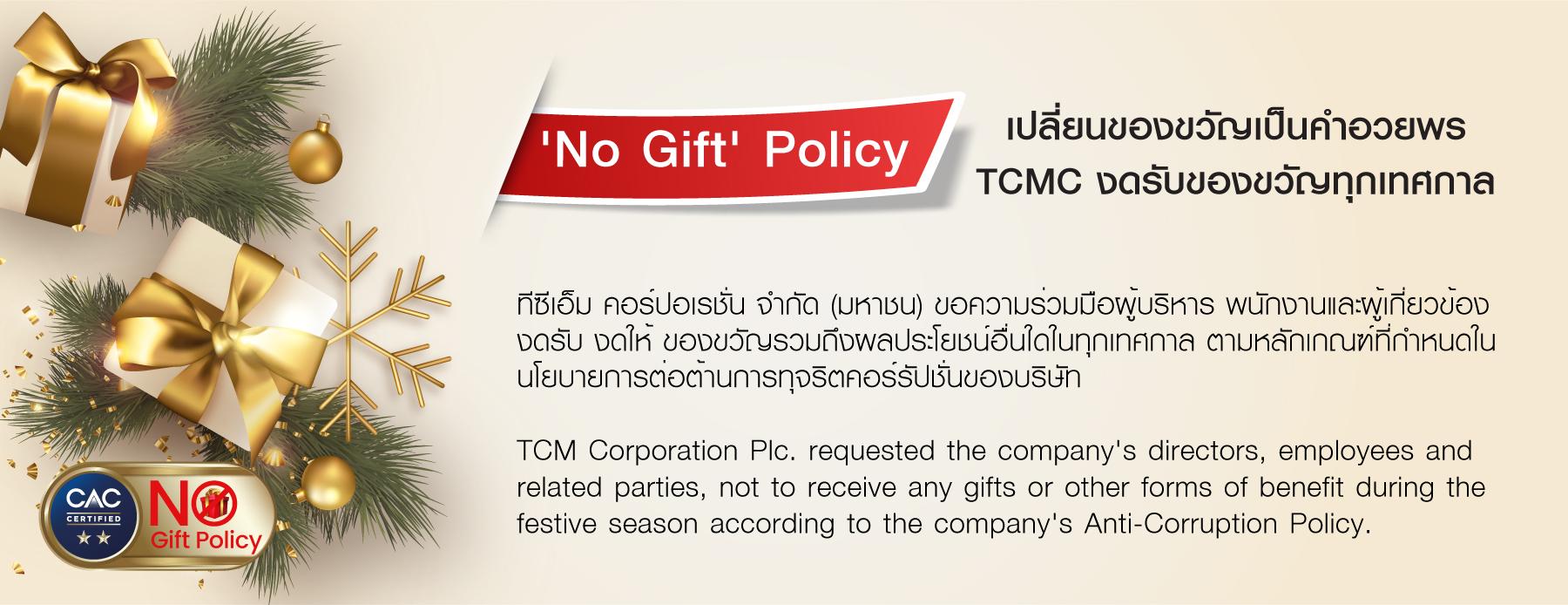
  1. Directors, executives, and employees are prohibited from offering gifts to a third party, such as government officials, agents, partners, private organizations that intend to induce, commit, or refrain from any act of guilty or unlawful in exchange for privileges.

  2. Directors, executives, and employees are prohibited from calling for or receiving any gifts or benefit for themselves or others that tend to motivate them to act or refrain from performing their duties.

  3. Business conducted with agencies, state agencies, state enterprises, or private organizations both domestically and internationally must be done in a transparent, fair, and legal manner both in Thai and foreign laws.

  4. Executives, directors, and employees must comply with anti-corruption policy and practices.

https://tcm-corporation.com/upload/esgpolicy/fileen_260304085143.pdf
Whistleblowing and Protection of Whistleblowers

Policy Overview

1. Purpose and Scope

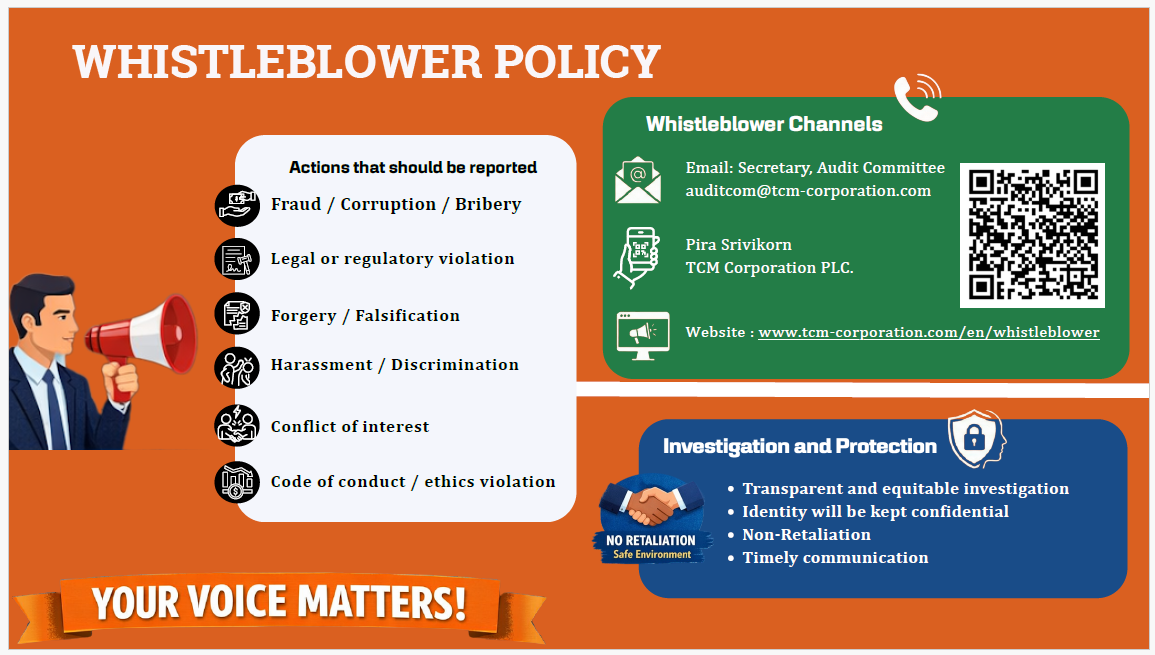
The policy encourages employees and stakeholders to participate in monitoring and reporting irregularities within the organization. It covers reports concerning serious misconduct, improper financial operations, or violations of the Code of Conduct and laws. Note: Personal grievances or HR-related matters should be reported through existing Human Resources channels.

2. Whistleblowing Channels

Reports can be submitted in writing through three main channels:

  • By Post: Address to the Secretary of the Audit Committee or the Chief Executive Officer (CEO).

  • By E-mail: auditcom@tcm-corporation.com or pira@tcm-corporation.com.

  • Company Website: www.tcm-corporation.com under the "Complaint Channel" section.

3. Whistleblower Protection Measures

The Company prioritizes the protection of those who report in good faith through the following measures:

  • Confidentiality: Personal information (name, address, photo) will be kept strictly confidential. Access to information is limited only to those directly involved in the investigation.

  • Employment Protection: Whistleblowers will not face termination, suspension, demotion, or any disciplinary action for reporting information without fraudulent intent.

  • Safety: Whistleblowers may choose to remain anonymous. If they feel unsafe, they may request specific protection measures from the Company.

4. Investigation Process and Sanctions

  • Investigation: Upon receiving a report, the Company will acknowledge receipt and conduct a fact-finding mission through a dedicated committee. The accused will be given an opportunity to present evidence and clarify the situation.

  • Results: The Company will summarize the findings and notify the whistleblower within a reasonable timeframe.

  • Sanctions: If the accusation is proven true, the offender will face disciplinary and/or legal action. Conversely, if a report is found to be false and made with malicious intent to defame others, the reporter will be subject to disciplinary action according to company regulations.

https://tcm-corporation.com/upload/esgpolicy/fileen_260304090106.pdf14-17
Preventing the Misuse of Inside Information

Management Guideline

The company has established measures and guidelines regarding the use of internal information of the company as follows:

  1. Directors, executives, and employees must not use and/or disclose material inside information that has not yet been disclosed to the public, whether directly or indirectly, for their own benefit or for the benefit of others

  2. Do not use internal information for personal interests when trading shares or share internal information with others for their benefit in purchasing shares.

  3. Do not disclose company business secrets to outsiders, especially competitors.

  4. Directors and executives are required to report their securities holdings to the Board of Directors following the Securities and Exchange Commission requirements.

  5. Executives, directors, and employees who are aware of significant internal information that may affect the change of trading prices must suspend the trading within 1 month prior to the date the company announces its performance or information publicly disclosed and at least 24 hours after the information publicly disclosed.

  6. Penalties for directors, executives, department managers, or employees who commit criminal offenses under the law on securities and stock exchange:

    • Salary reduction

    • Termination of employment, discharge, or removal from executive or managerial positions is considered intentional damage to the company. The case shall be submitted to the shareholders’ meeting if the individual is a director.

    • Reporting the offense to the Stock Exchange of Thailand and/or the Securities and Exchange Commission

    • Reporting the offense to the police or investigators

    • Taking any other action as resolved by the Board of Directors or the shareholders' meeting of the company

https://tcm-corporation.com/upload/esgpolicy/fileen_260304084008.pdf9
Prevention of money laundering

Anti-Money Laundering and Terrorist Financing

Directors, executives, and employees oppose money laundering and terrorist financing. It protects the company from being a tool or channel for the criminal to bring money into the financial system. The company expresses a clear intention to anti-money laundering and terrorist financing.

https://tcm-corporation.com/upload/esgpolicy/fileen_260304084008.pdf9
Giving or receiving gifts, entertainment, or business entertainment

Receiving or Providing Things or Benefits

1. Do not claim the goods or benefits of any person who has a duty or business related to the company, whether for the benefit of himself or others.

2. Not accepting or offering any other item or benefit from any person who has a duty or business related to the Company, except on occasions or festivals that are common to the general public. Such reception must be without prejudice to any decision, which is unfair to the performance of duties.

3. Receiving goods or other benefits provided to each other in inter-company activities or to the relationship between the organization should report to his supervisor and deliver it to the management or other relevant agencies for use in the affairs of the organization later on.

4. Expenses for business receptions are acceptable, but it must be spent reasonably.

https://tcm-corporation.com/upload/esgpolicy/fileen_250320091531.pdf13-14
Compliance with laws, rules and regulations

Compliance with Laws, Rules, and Regulations

The Board of Directors, executives, and employees strictly follow laws and regulations and avoid any involvement or action that will violate the laws, regulations, or any legal interpretations contrary to the spirit of the law, and avoid any actions that are inconsistent with the company's ethics and code of conduct.

  1. Practice or strictly enforce following the intent of the laws and regulations, both inside and outside the organization.

  2. Do not act, support, or allow for the avoidance of legal or regulatory compliance.

  3. Collaborate with the company and report information on violations or non-compliance or regulations to the company following the company procedure.

https://tcm-corporation.com/upload/esgpolicy/fileen_260304084008.pdf8
Environmental management

TCM Corporation PLC is committed to conducting business alongside responsibility toward nature and society. Our environmental management framework encompasses corporate policies and employee codes of conduct, with key highlights as follows:

Social and Environmental Policies

  • Social Integration and Responsibility: The Company recognizes its duty to be a socially responsible corporate citizen by supporting local community activities and initiatives in the areas where we operate.

  • Environmental Conservation: We implement concrete policies to promote nature preservation and environmental conservation activities.

  • Eco-Friendly Products: We focus on the selection and promotion of products that are environmentally friendly and minimize ecological impact.

Social and Environmental Responsibilities

  • No action will be taken to harm natural resources and the environment.

  • Ensure compliance with the law and environmental regulations.

  • Not promote of make transactions with any persons causing damage to the overall environment.

  • Effectively use the resources and enforce energy and resource conservation by applying technology to save energy at the company.

  • Inculcate social responsibility awareness among employees at all levels.

  • Encourage a good corporate governance culture

https://tcm-corporation.com/upload/esgpolicy/fileen_260304085505.pdf
Human rights

TCM Corporation Public Company Limited and its subsidiaries ("the Company") recognize the importance of respecting human rights as a fundamental moral principle for working and coexisting in society.

1. Commitment and Main Scope

  • International Standards: The Company supports and complies with the Universal Declaration of Human Rights (UDHR) and the principles of the International Labour Organization (ILO).

  • Target Group: This policy applies to all directors, executives, and employees (including temporary contract employees) and extends to those involved in the business value chain, such as business partners, suppliers, and contractors.

2. Essence of the Human Rights Policy

  • Equality: Treat everyone equally without discrimination, regardless of differences in race, religion, gender, age, or political opinion.

  • Strict Prohibitions: Do not participate in human rights violations, especially forced labor, child labor, illegal labor, and human trafficking.

  • Gender Equality: Support the Women’s Empowerment Principles (WEPs) and respect diversity.

  • Work Environment: Treat employees with humanity, free from violence or sexual harassment, while maintaining health and safety standards.

3. Guidelines and Management

  • Monitoring: Employees must be vigilant and not ignore human rights violations; they must report to supervisors or through designated channels.

  • Due Diligence Process: The Company has a continuous process to identify and assess human rights risks to plan for correction, prevention, and mitigation of potential impacts.

  • Protection: There are measures to protect whistleblowers who report human rights violations according to the Company’s Whistleblower Policy.

  • Punishment: Violating human rights is considered a disciplinary offense and may be subject to legal penalties.

https://tcm-corporation.com/upload/esgpolicy/fileen_260304085805.pdf
Occupational health and safety

TCM Corporation Public Company Limited prioritizes the care of its employees as family members and regards the workplace as a second home. The company focuses on the health, hygiene, and safety of the working environment through the following measures:

Core Policies and Guidelines

  • Creation of a Safe Environment: The company strives to develop a positive culture and work atmosphere, prioritizing the safety of employees' lives and property.

  • Health Promotion: Support is provided for hygiene and security to foster a safe and healthy working environment.

  • Prevention and Control: Hazards are controlled, and proactive measures are taken to prevent accidents and occupational diseases.

  • Legal Compliance: The company strictly adheres to labor laws and regulations related to occupational health and safety.

Key Operational Measures

  • Risk Assessment and Prevention: Assessments of safety, occupational health, and the working environment are conducted, alongside the formulation of prevention and corrective measures.

  • Standard Operating Procedures: Correct and safe work procedures are established to cover all production processes.

  • Equipment and Knowledge: Personal Protective Equipment (PPE) suitable for the nature of the work is provided, along with various training courses to enhance employee knowledge.

  • Environmental Assessment and Health Care: Working environments are assessed based on risk factors as required by law. Employees receive annual health check-ups, covering both general health and occupational risk-based examinations.

  • Governance Structure: A Committee for Safety, Occupational Health, and Working Environment has been appointed to act as representatives in overseeing employee safety within the company.

  • Communication of Beneficial Information: The company consistently provides useful health-related news and information through internal communication channels, such as the "SMILE" LINE account, to keep personnel informed.

https://tcm-corporation.com/upload/esgpolicy/fileen_260304084008.pdf7

Promoting Compliance with the Code of Conduct

Promotes Compliance by Directors, Executives and Employees

Yes

Description

Follow Up

  1. It is the duty and responsibility of the board of directors and employees to acknowledge, understand, and strictly follow the code of conduct.

  2. Supervisors at all levels must take responsibility for their employees to follow their code of conduct seriously.

  3. Supervisors at all levels must be leaders in the code of ethics. As well as enhancing the working environment, it is important for employees and their stakeholders to understand that compliance with the code is strictly enforced. It cannot be claimed that the practices set out in this code are unknown.

  4. When in doubt about how to comply with the code of ethics, please consult with your supervisor who is responsible for supervising the Code of Conduct.

Processes to Promote Compliance with the Business Code of Conduct

  • Establishment of Clear Policies and Guidelines: The Board of Directors has established the Corporate Governance Policy, Ethics Policy, and Business Code of Conduct to serve as operational frameworks. These policies focus on integrity, transparency, and accountability toward all stakeholders.

  • Regular Policy Review: The Corporate Governance Policy is reviewed annually to remain consistent with the evolving business environment.

  • Knowledge Building through Training: The Company organizes training sessions and assessments, such as the "Compliance with 9 Corporate Policies and Anti-Trafficking in Persons" program. These initiatives ensure that directors, executives, and employees have a correct understanding and help prevent errors arising from a lack of knowledge.

  • Participation and Commitment Confirmation: The Company requires 100% attendance and successful assessment completion from all directors, executives, and employees. Additionally, employees must sign to acknowledge and confirm their compliance with these policies, reinforcing the importance of maintaining ethical standards in every work process.

  • Assignment of Responsibility at All Levels: Corporate governance is assigned as a duty for personnel at every level. Supervisors are expected to lead by example and cultivate a positive governance atmosphere within their teams.

  • Oversight and Information Disclosure: The Company emphasizes transparency, prevents the unauthorized use of internal information for personal gain, and stands firmly against all forms of corruption to create sustainable value and growth for the business.

Process Document Link

https://tcm-corporation.com/upload/esgpolicy/fileen_260304084008.pdf

Page Number in Report

14

Anti-Corruption Networks & Projects

Joined or Declared Intent to Join Anti-Corruption Networks

Yes

Networks & Projects Joined

Network / ProjectCAC Certified
Thai Private Sector Collective Action Against Corruption: CACY
United Nations Global Compact (UNGC)
Participation of anti-Corruption networks and initiatives

Material Changes & Developments in CG

Reviewed the CG Policy or Board Charter in the Past Year

Yes

Material Changes or Developments in the Past Year

No

Implements the CG Code for Listed Companies

Yes

CG Code — Description

Corporate Governance Report (CG Code Compliance)

The Company is committed to continuously developing its operations in accordance with the Principles of Good Corporate Governance and the CG Code guidelines. As a result, in 2025, the Company received a 5-star or "Excellent" rating in the Corporate Governance Report of Thai Listed Companies (CGR 2025) conducted by the Thai Institute of Directors (IOD). Additionally, the Company achieved a perfect score of 100 points (5 medals) for the AGM Checklist for the 6th consecutive year.

The company’s good corporate governance consists of the following 8 principles:

Principle 1 Establish Clear Leadership Role and Responsibilities of the Board

Principle 2 Define Objectives that Promote Sustainable Value Creation

Principle 3 Strengthen Board Effectiveness

Principle 4 Ensure Effective CEO and Top Management

Principle 5 Nurture Innovation and Responsibly Conduct Business

Principle 6 Strengthen Effective Risk Management and Internal Control

Principle 7 Ensure Disclosure and Financial Integrity

Principle 8 Ensure Engagement and Communication with Shareholders

Contents